

Kamino has appointed Michael Weisz as CEO, an appointment that begins a new phase for the team focused on institutional growth and U.S. expansion.
In his announcement, Weisz noted how he believes Kamino is well-positioned for the future of financial services and capital markets, given its strong four-year foundation of building.
"There's a generational moment happening across financial services and capital markets - infrastructure is shifting on-chain, ushering in a new era of access, distribution and liquidity for every kind of asset. Kamino is positioned to be a core player in that future, and I'm honored to lead our next chapter."
He also published a letter outlining his vision for the protocol, now Solana's third-largest by TVL at $1.4B:
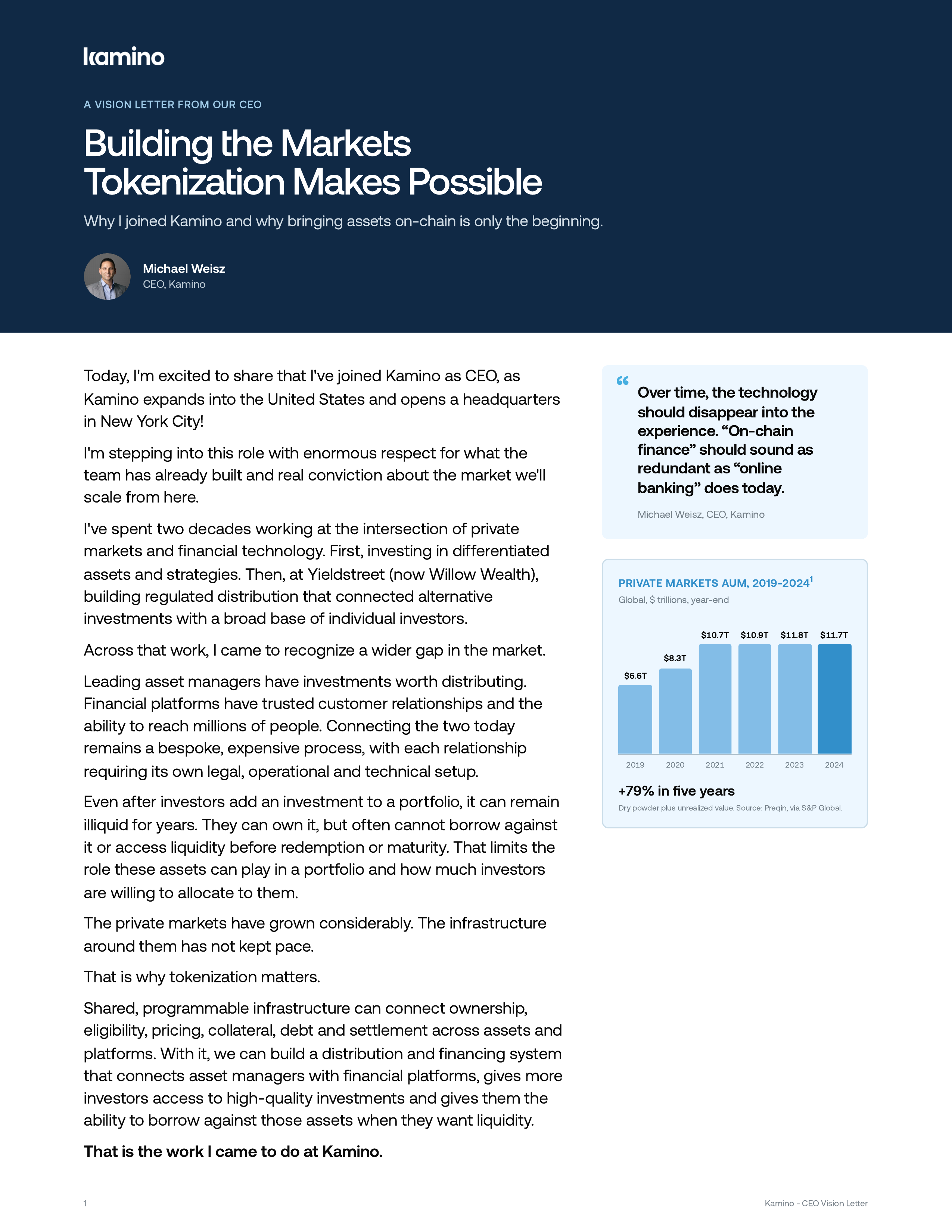
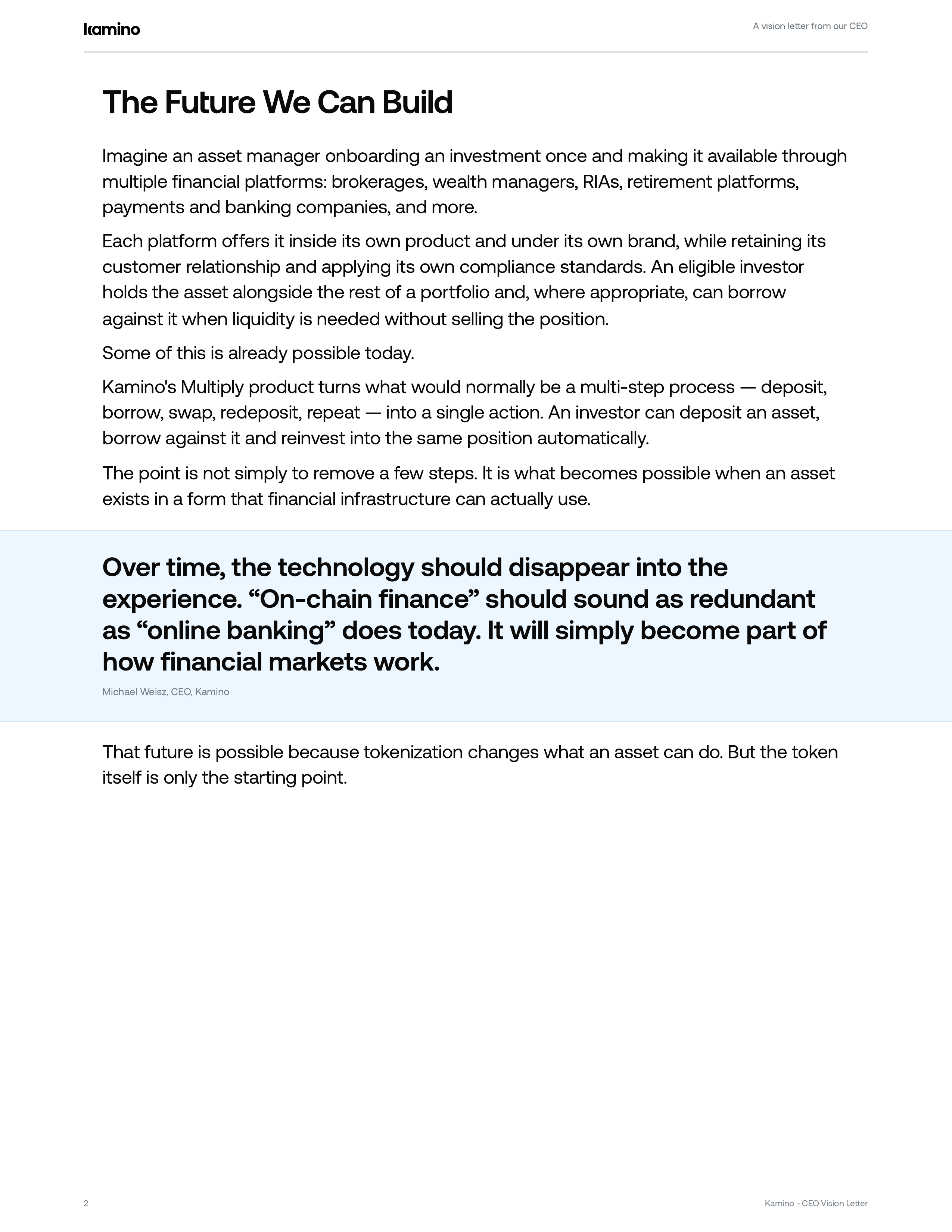
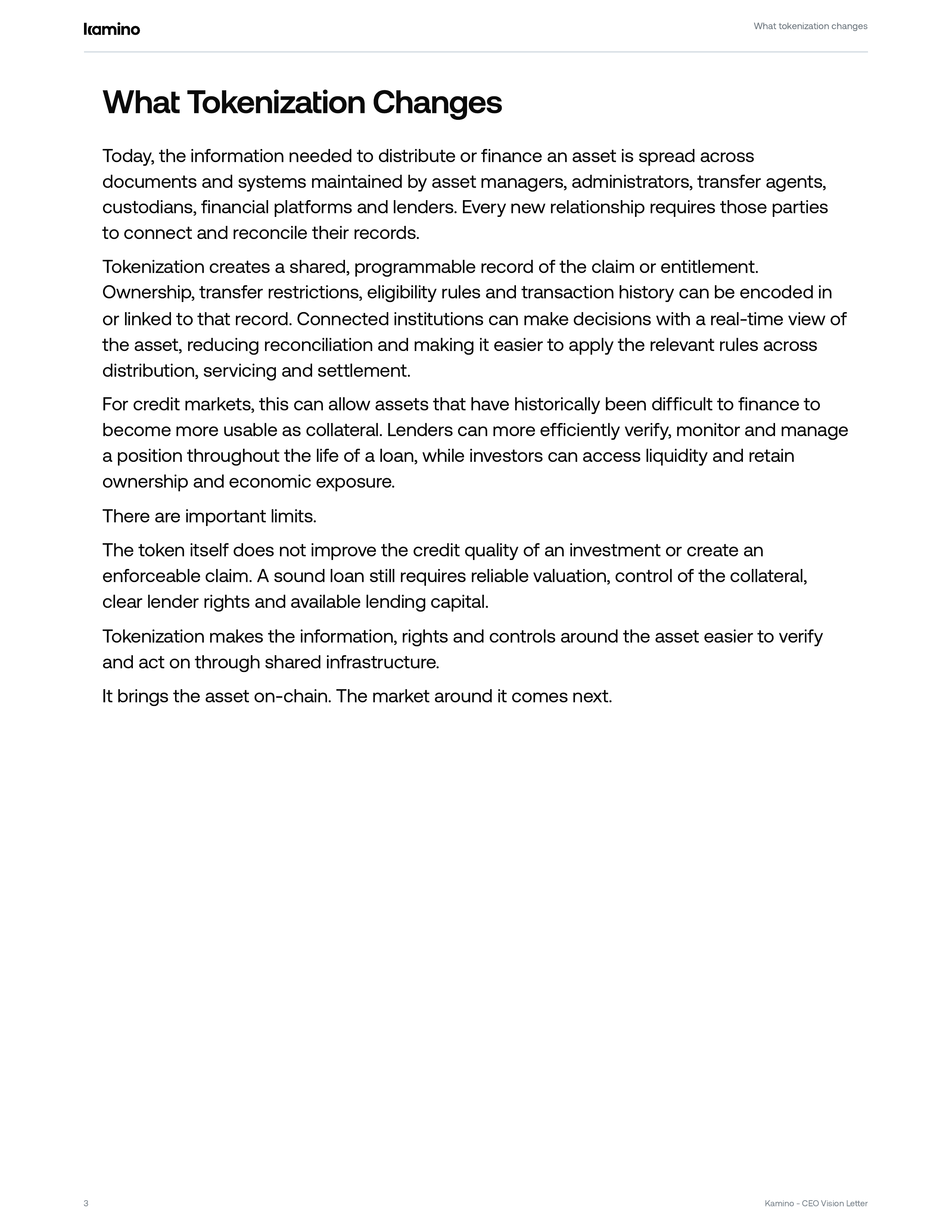
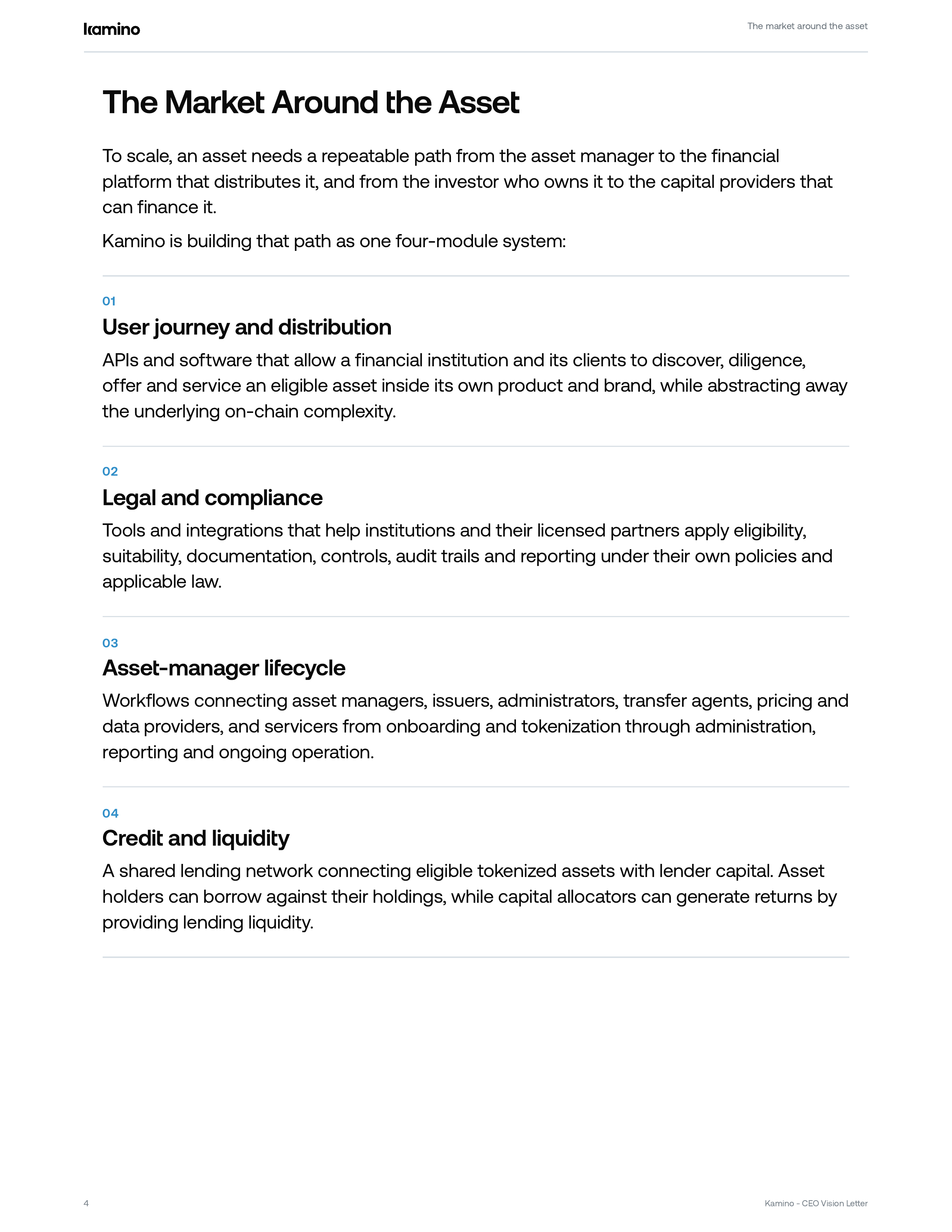
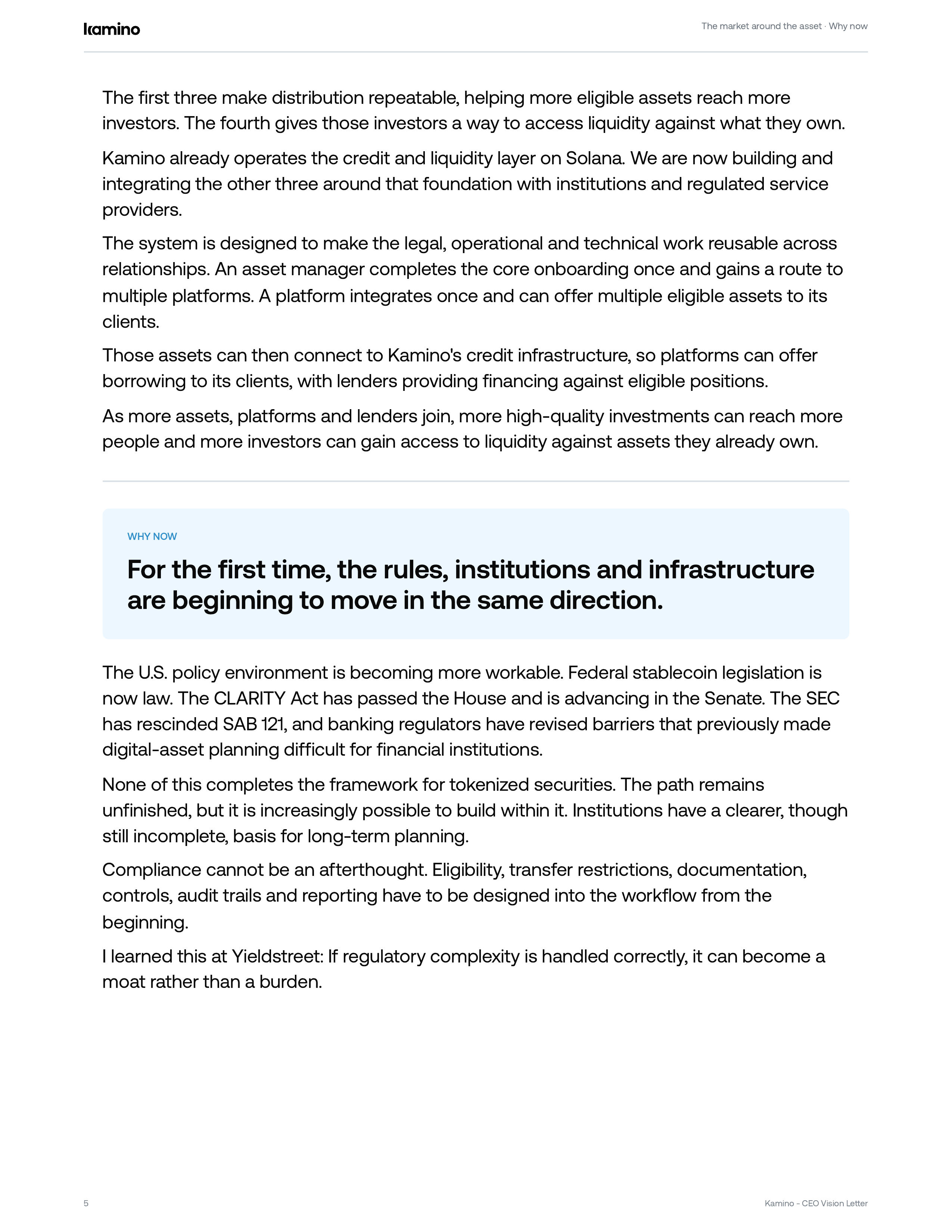
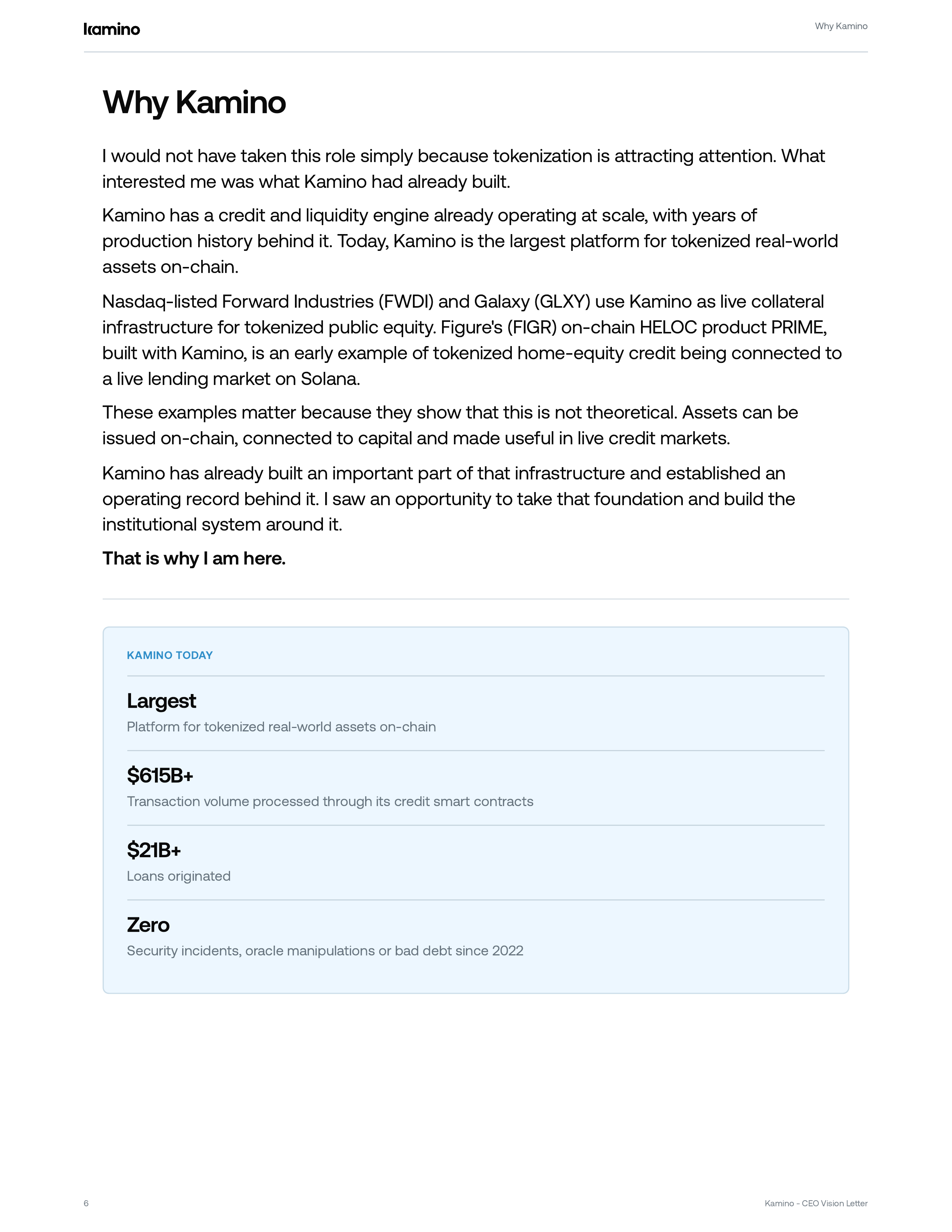
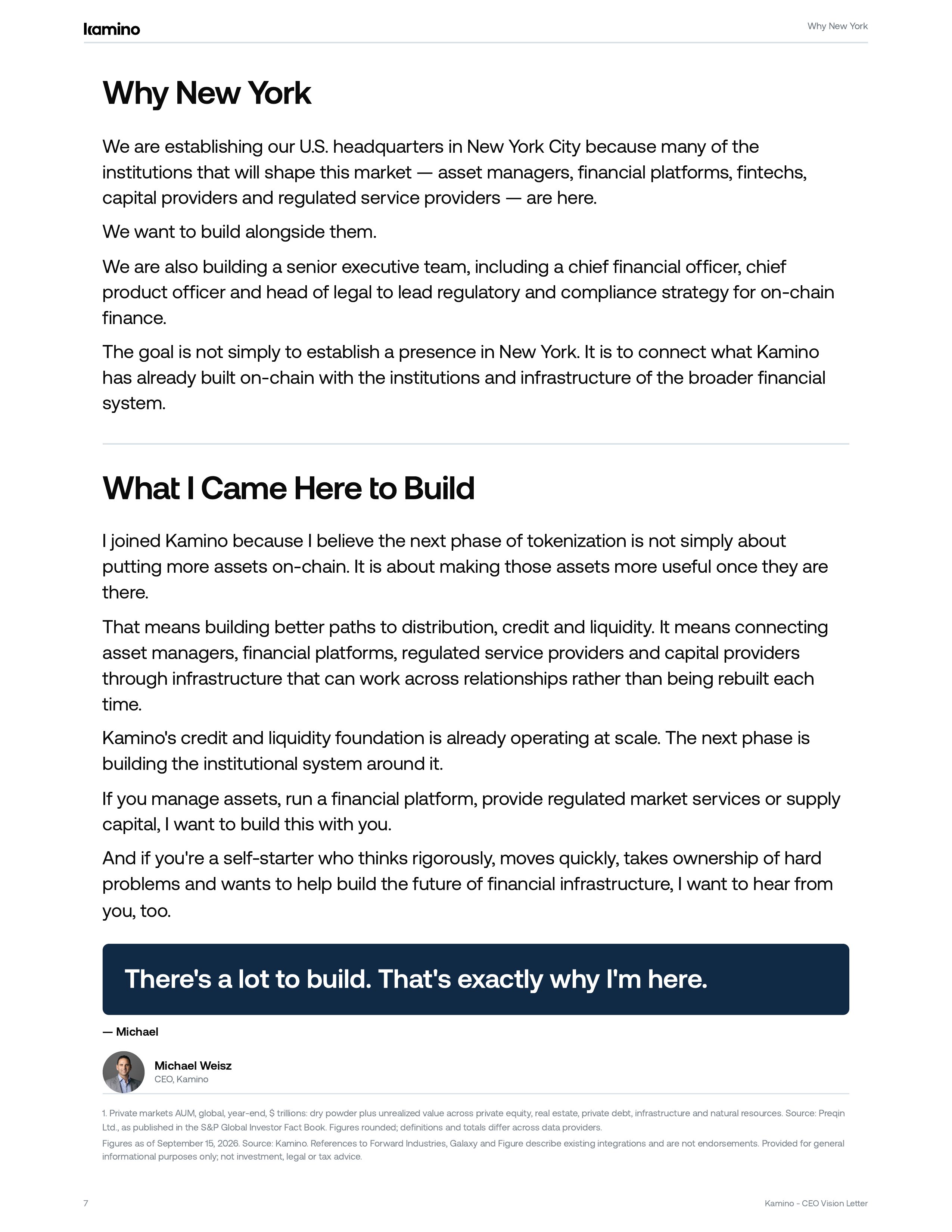
Weisz's CEO Vision Letter
Kamino Adds a Private-Markets Operator
Weisz co-founded Yieldstreet, now Willow Wealth, an alternative investment platform that gave investors access to private-market assets such as real estate, marine finance, and art lending. Yieldstreet deployed more than $6 billion across asset classes and raised more than $250 million in venture and private equity funding.
Kamino is a natural next step for Weisz. The protocol competes as a crypto-native lending venue (Solana's largest money market) that is also building infrastructure for asset managers, issuers, market makers, and financial platforms that want to distribute credit products onchain.
 Bart Hillerich
Kamino said Weisz will help expand the protocol’s U.S. capabilities, work with more institutional asset managers and financial platforms, and build an institutional team in New York City. The plan gives Kamino a traditional finance-facing operating base while its core products remain on Solana.
Weisz called tokenization an important first step but argued that markets still need infrastructure to make tokenized assets useful after issuance.
"Tokenization worked," he wrote. "But what’s missing is what comes after you put an asset on-chain. That requires liquidity, credit, distribution and infrastructure."
Why the Appointment Matters for Kamino
Kamino began as a Solana DeFi protocol for lending, liquidity vaults, and leveraged strategies. It has since grown into a broader credit platform that combines peer-to-pool lending markets, automated vault infrastructure, and real-world asset integrations.
The protocol now operates where crypto-native capital markets meet regulated or institutionally sourced credit. Its products include isolated markets, fixed-rate offerings, institutional yield vaults, and RWA-focused markets such as PRIME, which is backed by U.S. home equity loans.
 Bart Hillerich
Kamino generated $1.84 million in revenue during Q2 2026 and ended the quarter with $2.29 billion in deposits. Its Ethena market held more than $500 million in deposits, while the PRIME segment had surpassed $600 million in market size.
Kamino now lists more than $2.6 billion in market size and nearly $582 million in vault deposits. Its institutional yield products include a Commodity Yield vault built around real-world commodity trade financing, now boasting over $32 million in deposits.
 Bart Hillerich
From Tokenization to Onchain Credit Infrastructure
Early RWA projects focused on putting assets onchain. The market is now working to turn those assets into collateral, yield products, credit markets, and distribution channels that can support financial activity.
Kamino is pursuing that next step. Credit protocols depend on deep liquidity, consistent risk management, and reliable borrower demand. Kamino must scale its markets while attracting counterparties that know private credit but may have less experience with Solana or DeFi.
Weisz’s experience will help with that institutional work.
Yieldstreet connected investors with alternative credit opportunities that once required private-bank access or higher minimums, and Kamino faces a similar access and distribution problem (just using onchain markets instead of a conventional fintech platform).
Moreover, this leadership change is another example (although, one of personnel, not technology) of Solana DeFi infrastructure moving closer to traditional capital markets. As that convergence deepens, we should expect more top teams to make similar hiring plays to best position themselves for DeFi's next phase.